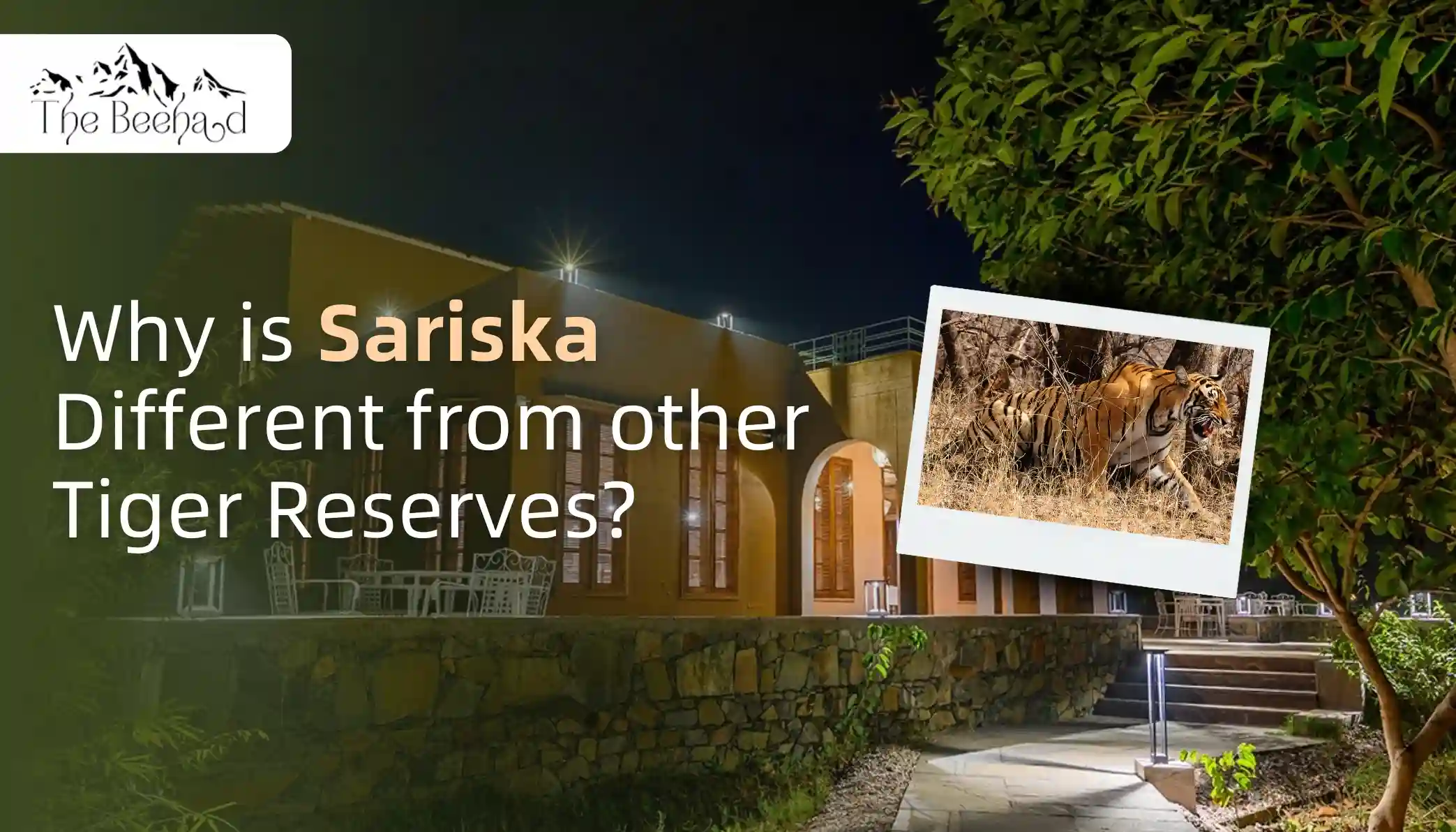
There are a few famous tiger reserves in India, but Sariska Tiger Reserve in Rajasthan is something unique in many aspects besides the sight of wildlife. This is a unique reserve in the Aravalli hills, which has a combination of natural beauty, royal history, conservation success, and cultural heritage. Tourists tend to compare it with well-known reserves such as the Ranthambore National Park or Jim Corbett National Park, but Sariska offers the tourists a completely different experience. In case you are asking yourself why Sariska is different, it is because of the scenery, the historical background, the ecological restoration or the traveling experience, which is rare in other parks.
The geography of Sariska is considered to be one of the main reasons why it is different. Sariska does not have thick and central Indian forests, but rather it is located in the ancient Aravalli mountain range, which happens to be one of the oldest geological formations in the world. Rocky hills, dry deciduous forests, grasslands, and narrow valleys are some of the geographical features that form a dramatic wilderness environment.
Not only does this diverse landscape favor a variety of wildlife, but it also provides the visitor with panoramic views that are not common with other tiger reserves, which are usually dense jungles. On the safari, the tourists get to view rugged cliffs, seasonal streams, and an open plateau, which provides them a better view and a distinctive feeling of the safari. A semi-arid environment also implies that the reserve is seasonal and different each time a person comes there.
A conservation history that is inspiring and motivating is another reason why the Sariska Tiger Reserve is an extraordinary place. The issue of poaching caused the tiger in the reserves to become extinct and this was also one of the most distressing wildlife crises in India in the early 2000s. Sariska, instead of becoming irrelevant, became the image of conservation toughness.
Tigers were also relocated in 2008 in a historic reintroduction at Ranthambore National Park. It was the first occasion when the tigers were moved anywhere in the entire world to repopulate a reserve. The increasing tiger population in Sariska has been an indication of hope, conservation of the environment scientifically and the participation of the communities today. Tourists do not simply get into a jungle; they are experiencing one of the best wildlife restoration stories in India.
Sariska, unlike most tiger reserves, where the emphasis is on wildlife alone, is filled with ancient temples, forts and ruins, which contributes to a very strong cultural aspect. In the midst of the forest is the well-known Pandupol Hanuman Temple, a highly venerated pilgrimage place attributed to the Pandavas of the Mahabharata. Religion has merged with nature as followers go to the reserve to pray.
Other attractions in the reserve are the ruins of the medieval settlements and the ancient Kankwari Fort , located on a hill. It is considered that the fort is a place where Mughal prince Dara Shikoh was imprisoned. The presence of these historical buildings offers a unique experience in which the concepts of wildlife tourism and heritage exploration collide and Sarika is much more than just another safari site.
Though tigers are the key attraction, Sariska has good biodiversity, which adds up to its uniqueness. The reserve has leopards, striped hyenas, jungle cats, jackals and caracals. The predator base of the ecosystem consists of herbivores like sambar deer, nilgai, chital and wild boar.
Sarika is also a rewarding experience for bird lovers, and one will see some crested serpent eagles, peafowl, sand grouse and treepies. The terrain is relatively open and this would be the choice of photographers as well as the first-time safari traveler, as wildlife is more easily seen in the relatively open reserves than in the densely populated reserves.
Sariska is relatively peaceful and less commercial in a safari experience as compared to very busy parks. There is low traffic of tourists, which guarantees tranquil touring and a greater interrelationship with nature. The safaris will go through rough terrain and historical areas; hence, every ride will be an adventure and not a tourist one.
Since the reserve is still in the process of developing its tourist infrastructure, tourists have a more natural wilderness experience. The fact that it is not overcommercialized is also an advantage, as it allows the travelers to see the forest in its purest state.
The presence of heritage hotels, eco-resorts, and forest lodges is also another attraction that makes staying at Sariska interesting. Most of the properties are turned into royal hunting lodges or heritage estates, and one can have an insight into the royal history of Rajasthan. A combination of luxury and wilderness is the best part of staying in such accommodations.
The eco-resorts around the reserve specialize in sustainable tourism, which includes nature walks, village tours and even birdwatching. The tourists can also wake up to peacock calls and taste the traditional Rajasthani cuisine, as well as explore the rural culture and wildlife. Such a mix makes Sarika the perfect destination because a visitor is able to relax and experience heritage and natural beauty during a single visit.
Its nearness to big cities such as Jaipur and Delhi is an added advantage. It is a good weekend destination, being 110 km near Jaipur and approximately 200 km near Delhi. A few hours by road can get the travelers to the reserve, thereby making it a viable alternative to far-off tiger reserves.
This convenience enables quick short trips without losing the excitement of a wildlife safari. Sarika offers the right combination of comfort and adventure to urban travelers who need to have fast getaways into nature.
The combination of elements that are not easily combined gives the answer to the question of why Sariska stands out. It is a tiger reserve that has been reconstructed by means of conservation success and a historic landscape that has ancient monuments and a serene wilderness that provides a less congested safari experience. The Aravalli topography is very beautiful and heritage accommodation and religious locations enrich the experience.
Sariska does not only offer a wildlife experience but a holistic travel experience that is based on wildlife, history, culture, and relaxation, unlike other reserves, which only offer sightseeing of tigers. Sarika National Park has something to serve you, regardless of whether you are a nature enthusiast, a photographer, a spiritual traveler or you are just out for a weekend.
Sariska Tiger Reserve is not any other wildlife attraction; it is a living model of ecological regeneration, culture and sustainable tourism. The Aravalli sceneries and ancient temples, the uplifting tiger reintroduction narrative and the serene safari paths all add towards its uniqueness.
Sariska also offers an alternative to the normal wildlife tourism for people who want to explore a different animal. A stay in Sariska will guarantee visitors not only a chance to observe wildlife but also to have a significant experience relating to the nature and history of this state of Rajasthan. In search of a scenic, soulful and different experience with the tiger reserve, you will find yourself in a totally different experience with Sariska.
Ans.Sariska has been successful in tiger relocation, historical ruins within the forest, such as the Kankwari Fort and its closeness to Delhi. It has a unique mixture of wildlife, heritage and dry deciduous landscapes.
Ans. October to March is the appropriate month to visit Sariska because of the favorable weather and fair visibility of wildlife. During summers, between April and June, there are greater opportunities for tiger sightings near water bodies.
Ans. Yes, Sariska is a perfect place to do wildlife photography that provides a wide range of species such as tigers, leopards and birds. The open landscapes, ruins, and lighting conditions are an excellent opportunity to make unique and dramatic shots.