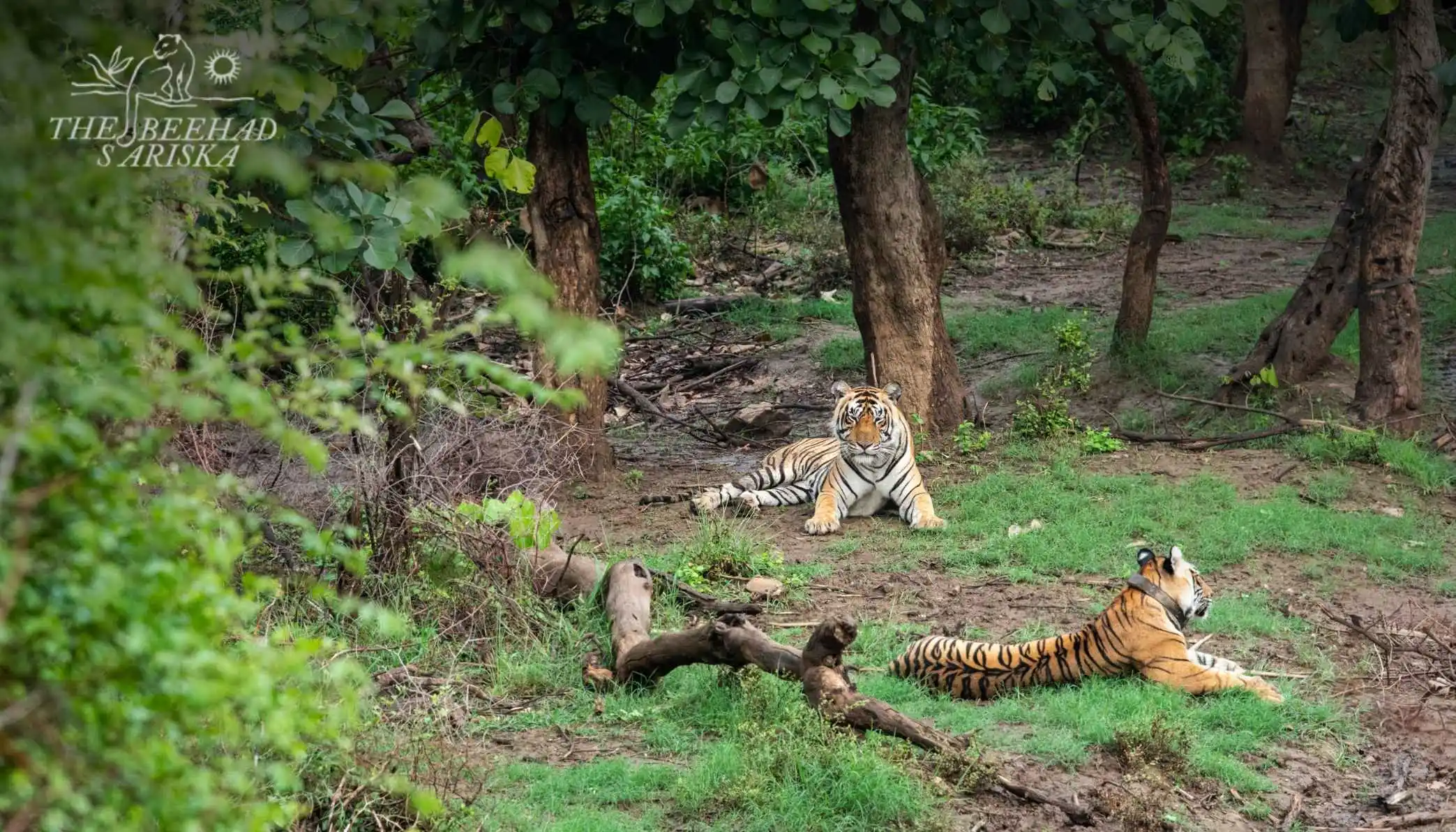
The main difference between a national park and a sanctuary is the level of control. A national park gives the strictest protection - no livestock grazing, rights settled through a legal process before the final declaration, and very limited human use. A wildlife sanctuary is a little more flexible, so some existing rights and regulated activities can continue. A tiger reserve is different from both. It is not a separate "type of park". It is a tiger-focused management area that can include national parks, sanctuaries and other forest land. If you are planning a trip, knowing this helps you understand what you can and cannot do at a resort in Sariska and inside the reserve.
Sariska is a good example to keep in mind as you read. It is a tiger reserve in Rajasthan, and its legal story is more tangled than most people expect. You will also want to know how a reserve is divided into core and buffer zones, because that shapes the rules around your visit. We explain it below in simple terms.
Here is the short version before we go deeper.
| Parameter | National Park | Wildlife Sanctuary | Tiger Reserve |
|---|---|---|---|
| Law | Section 35, Wildlife (Protection) Act, 1972 | Sections 18 and 26A, same Act | Section 38V, added in 2006 |
| Key restrictions | Stricter rules, including no livestock grazing (Section 35) | Protected by law, with some rights and activities governed by specific permissions | Tiger-conservation framework with notified core and buffer areas |
| Main goal | Protect the whole ecosystem | Protect wildlife and habitat | Protect tigers and their habitat |
Keep one thing in mind. These three are not three equal boxes. The first two are protected area categories. The third is a layer of management on top of land that is already protected, fully or partly.
India's wildlife law sets up different kinds of protected areas. National parks and sanctuaries both come from the Wildlife (Protection) Act, 1972. The State Government declares them by notification.
A national park is declared under Section 35 of the Act. The area must have real ecological, faunal, floral or natural value. Once the area is officially declared a national park (the final notification), strict rules apply. The following rules then apply.
The aim is to protect the area’s wildlife and natural environment through stricter controls on human activities.
A wildlife sanctuary is declared under Sections 18 and 26A. It protects wildlife and its habitat, but certain existing rights and activities may continue, subject to the applicable legal provisions and restrictions.
The key difference between a national park and a wildlife sanctuary is that the rules governing existing rights and activities can differ. National parks generally impose stricter restrictions, while certain activities may be permitted in sanctuaries under specified conditions. Both are legally protected areas, and a sanctuary should not be mistaken for land open to unrestricted human use.
A sanctuary can also be upgraded. The State Government can declare an area inside a sanctuary as a national park, but only after rights are settled and the land is vested in the State. Sariska has a preliminary national park notification, not a finished upgrade.
A tiger reserve is not a third category equivalent to a national park or wildlife sanctuary. It is designated specifically for tiger conservation and may encompass different types of protected and forest areas.
Tiger reserves came into law through the 2006 amendment, under Section 38V. The State Government notifies a tiger reserve on the advice of the National Tiger Conservation Authority (NTCA). The roots go back to Project Tiger, which started in 1973.
In simple terms, a tiger reserve is a conservation framework that can encompass different land designations. Its legal provisions are set out in Section 38V.
This is where most readers get confused, so let us be clear.
One piece of land cannot be both a national park and a sanctuary at the same time. But one tiger reserve can contain a national park in one part, a sanctuary in another part, and plain forest land elsewhere.
Some real examples:
That is why you will often see both “Sariska National Park” and “Sariska Tiger Reserve” used for the same place. The tiger reserve is the legal designation. The “national park” name is widely used, but the final national park notification has not been confirmed
| Parameter | National Park | Wildlife Sanctuary | Tiger Reserve |
|---|---|---|---|
| Governing section | Section 35 | Sections 18, 26A | Section 38V |
| Who notifies | State Government | State Government | State Government, on NTCA advice |
| Existing rights and rights-settlement | Settled before final notification | Some rights can continue | Handled through core and buffer rules |
| Grazing | Not allowed | Regulated by the Chief Wildlife Warden | Strict in core, managed in buffer |
| Tourism | Allowed with permission, regulated | Allowed with permission, regulated | Regulated, mostly in tourism zones |
| Boundary changes | Tightly controlled | Tightly controlled | Core and buffer changes follow set procedures |
| Managed by | Forest Department, under the Chief Wildlife Warden | Forest Department, under the Chief Wildlife Warden | Field Director, with NTCA oversight |
| Example | Ranthambore | Sonanadi | Sariska, Ranthambore |
Rights and relocation are linked, but they are not the same thing. A person's land and traditional rights are settled through a legal process. Moving a village out of a core area is a separate step, and it is meant to be voluntary and follow the law.
You may also see these names. They are not the same as the three above.
For a traveller, this is the most useful part.
The core area prioritises tiger conservation, and access is subject to applicable restrictions and permissions. Where tourism is allowed, it is only on fixed routes, with permits and trained guides.
The buffer zone has a different job. It protects the core, gives wildlife room to move, and lets local people continue their livelihoods in a managed way. The buffer area should not be viewed as a low-protection zone; it plays an important role in the wider conservation landscape. It follows its own management goals, and it still matters a lot for tiger survival.
What this means for you:
Sariska sits in Alwar district, Rajasthan, in the Aravalli hills. It is a good case to study because its status changed several times.
That last point surprises many readers. A "preliminary" notification is not the same as a "final" one. The final step needs the rights and boundary questions to be settled first.
What does this teach us? A legal label does not protect tigers by itself. Staff, patrols, local support and steady planning do the real work.
Keep the legal side in mind, but let's keep the trip practical too.
When choosing a resort near Sariska Tiger Reserve, consider its location, safari arrangements, safety practices and the services available during your stay.
Do not pick a place only because it says "inside the forest". Ask where exactly it is and what that means for noise, light and wildlife movement.
The Beehad is a luxury resort in Sariska that describes itself as a luxury stay in a wild landscape. It has 6 cottages and 4 camps, so you can pick the style that fits your trip. The cottages have modern amenities, and the camps come with private decks. Guests can go bird watching and enjoy traditional Rajasthani meals. It also works as a base for nearby places like Neelkantha Mahadeva Temple, Bhangarh Fort and Siliserh Lake. Before booking, confirm the exact location, safari arrangements and current room details.
Ans. A tiger reserve is a management area under Section 38V. It can include a national park, a sanctuary and other land.
Ans. A national park has stricter rules. But both are legally protected, and hunting is banned in both.
Ans. In a national park, rights are settled before the final notification. In a sanctuary, some existing rights can continue. In a tiger reserve, it depends on whether the land is core or buffer.
Ans. Yes, but only with permission and on set routes. Core areas are the most restricted.
Ans. Sariska is a tiger reserve. Legally, it is a wildlife sanctuary, and a 1982 preliminary notification proposed a national park for part of it. A preliminary notification is not final, so check the Rajasthan Forest Department for the current status.