Luxury travel is a moderated and not a glorified thing of the future. Places are becoming more and more attractive to tourists, whereby one can feel comfortable without the feeling that he or she is out of touch with nature, and recreation is not something that does not relate to adventure. This has redefined a resort with a swimming pool , the more so when it is coupled with calm mornings, non-hurried days, and moments that are pushed by the outdoors and not by a particular time schedule. The emphasis has been shifted on space, privacy, and a slow rhythm that helps guests to relax instead of being busy all the time. With location, design, and atmosphere collaborating, a stay is not as much an escape as a restoration.
The location where one is placed often determines how one can feel during the stay since the beginning of the stay. Places that have open areas, natural silence, and minimal external motion have a way of slowing things down without making the effort. With nature kept close, days are not in a hurry, and movement becomes less painful; it is almost instinctive. Visitors can afford to relax and not come and leave, and time starts becoming less organized.
With time, the focus is no longer on being active at all times. Ten in the morning is peaceful; spacious grounds will not be hurried, and days will go by long and long without having to be filled in. The rhythm is slow, although it does not get vacant. When a place promotes this rhythm, comfort and exploration will naturally intersect, and the time spent at the location will feel harmonious and truly healing instead of organized around distractions.
Such an environment is also conducive to travelers seeking a Sariska resort in Alwar, which provides a serene environment without any sense of being remote.
When a resort reacts to its environment rather than attempting to assert control over it, it is more real. Respectful landscape design can enable the environment to persist through the period of stay, where open space plans, natural quality of materials, and limited detailing have been used to create spaces that are relaxed in nature as opposed to artificial. When the buildings are well placed with the surroundings, people find it easy to move around the property. There is no effort to link the indoor and the outside, and the views remain unrestricted rather than framed and controlled.
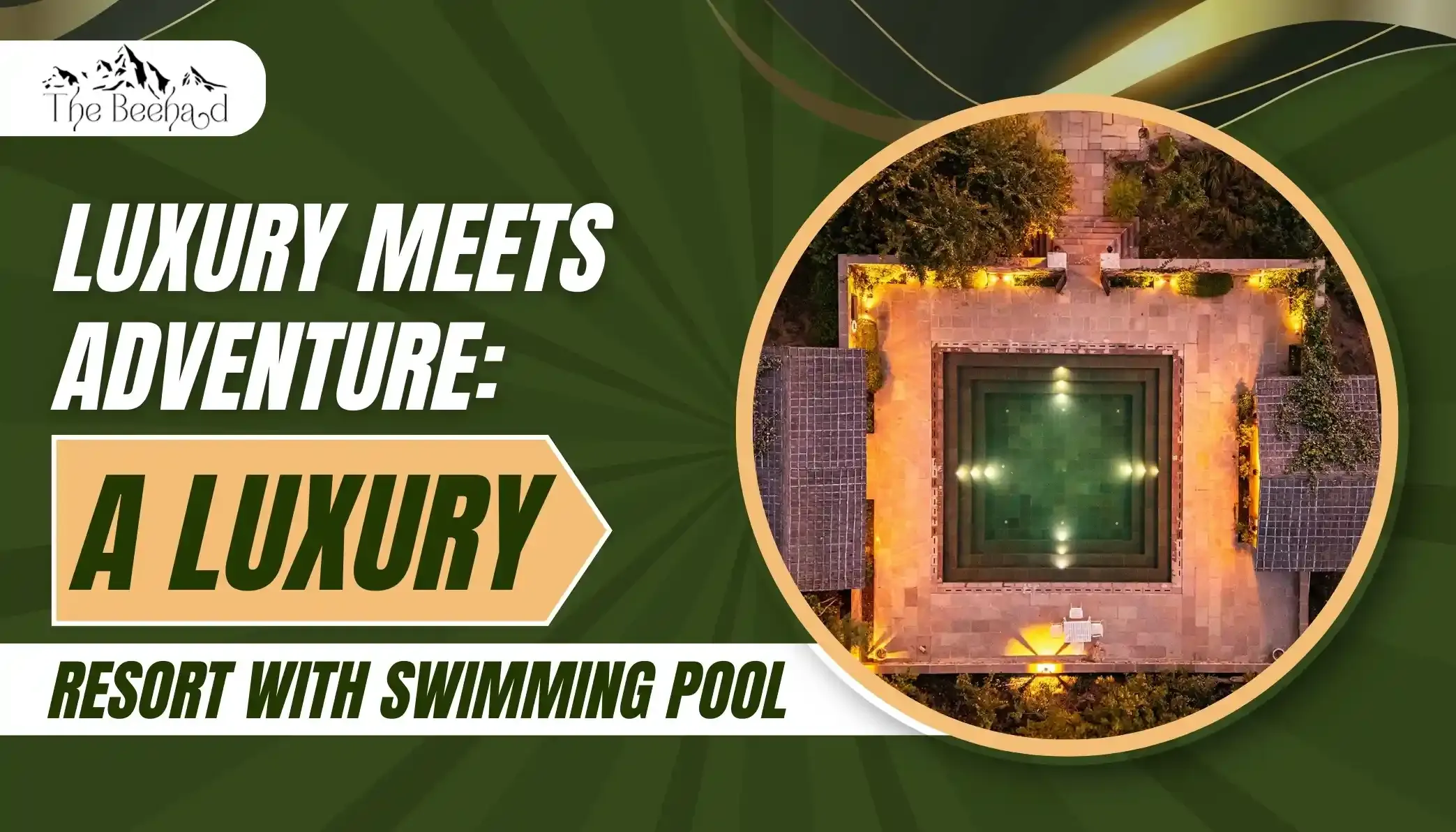
Swimming pool is an aspect in most of the stays. In this case, it is incorporated in the everyday rhythm without attracting any attention to itself. There is entry and exit of guests throughout the day as some come in to swim and others to sit close by. The pool is not an attempt at conspicuity; it is simply a part and parcel of both the environment and the rhythm of the vacation.
Accommodation planning directly influences the extent to which a stay is made to be relaxed. Rather than having to make a heavy design or visual statement, comfort here is simplicity and space. The rooms are comfortable almost without having to settle down.
Calm interiors—Layouts will also be clean and unobtrusive and will allow the guests to relax without being overwhelmed by the details.
Space acuity— The distance between rooms is being considerate to create more space to enable individuals to remain quiet and reduce the unnecessary movement within the common area.
Private atmosphere— The above setup facilitates undisturbed time, and rest can be natural instead of being planned or scheduled.
Unhurried living:Spaces will be built with a slow pace to allow the visitor to have time to relax either inside or outside without being in a hurry to go through the experience
All these factors combine to form the accommodation that is personal, comfortable, and non-imposed.
A stay will always be more complete when it also provides opportunities that can go beyond the room. The simple environment and the open spaces beckon guests to go out without the need to have a plan, and as such, the experience becomes relaxed and not organized.
Certainly, some of the guests prefer to walk the surrounding roads, some just enjoy the landscape, and most of them sit outside and do nothing much. This liberty of participation or not creates a personal and unstructured stay, which adds to it without transforming the visit into a program.
The adventure does not necessarily begin at the beginning with a plan. With a less hectic environment, it tends to manifest itself spontaneously by taking a quick walk without deliberation, stopping in an unusual place, or just sitting and observing what is going on. One does not need to take a path or a destination. Movement is not to be expected but is optional.
These little unplanned things are what guests are likely to remember. They come unstressed and go unstressed. They are more memorable than what is planned, and this means that adventure can assume a less heavy form influenced by curiosity and mood and not expectation.
There are others that are time-centered as opposed to action-based places where the day is not subdivided into slots and timetables. The emphasis is placed on letting time have its way instead of scheduling it. The mornings are not too busy, afternoons are not tiring, and evenings are approaching without the need to be fixed. Such absence of pressure gradually turns the process of the stay into one in which there is no need to force or desire to rest, but rather it comes naturally.
The guests will not be prone to one experience after another, since they will spend more time at the same place, at the pool, outside, or simply having a rest. This slower speed makes the stay not a break but a reset that ought to be continued even after the departure.
Having a comfortable experience balance, a stay is complete, and one does not have to get overstimulated. Excess structure makes travel too hectic, and too little an experience too empty. The golden mean will allow the guests to engage in where they wish and also to withdraw to where they wish.
This balance is also the one that affects the memory of the stay. Visitors are not aware of any one thing they did in that location but what that location did to them since they were not hurried but relaxed and in the moment. It is this sense of ease that causes a visit that is an otherwise short one to be recalled.
The Sariska Resort Alwar is often characterized by a perfect balance, which is what can be accomplished quite quietly. When place, design, comfort, and experience are in balance without straining too much, the impact will seem as natural. Space is expansive, time is relaxed, and the environment is just as much a contributor to experience. Luxury and adventure do not exist as opposites in such environments anymore. They combine in a natural way that makes guests experience a feeling of comfort even when the visit ends.
Ans. The location of the resort is close to the Sariska region in the city of Alwar in Rajasthan. It is characterized by open spaces and a less noisy environment and is also the place where travelers would want to spend time in the middle of nature and yet not too far out.
Ans. The resort has well-thought-out rooms and villas that are planned to be comfortable and private. It remains space-oriented with a relaxed interior and a setting where the guests can be comfortable initially instead of getting used to it as time goes on.
Ans. Eating in the resort will involve freshly cooked cuisines with the influence of both local and common tastes. The experience is not in a rush, and it is laid back, allowing the guests to take their time to eat in a peaceful environment.