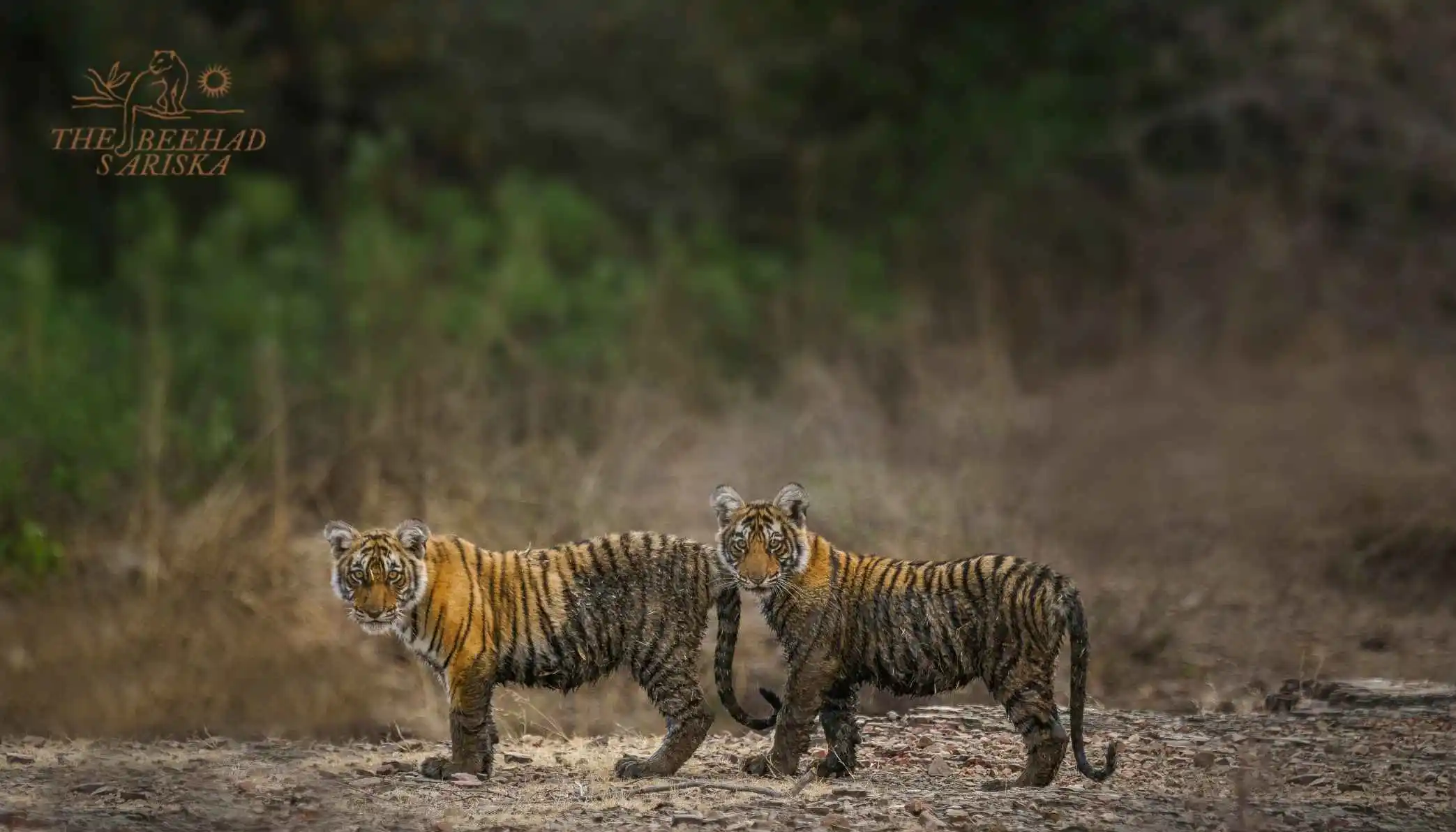
Sariska Tiger Reserve in Rajasthan became a major case study in wildlife conservation after its tigers disappeared in the early 2000s. The Sariska Tiger Reintroduction Programme was initiated on 28 June 2008, when a male tiger was relocated from Ranthambore by helicopter. On 28 June 2026, the Union Environment Minister reported that the reserve supported 56 tigers. If you plan to see this recovery in person, check the park’s official safari rules first, and then choose a resort in Sariska that is close to your safari gate.
Sariska's recovery has not been straightforward. Tiger deaths, delayed breeding, habitat pressures and village relocation have all shaped the programme. This guide examines the recovery, the challenges that remain and the lessons it offers for wildlife conservation.
Note: Tiger numbers change with births, deaths and new counts. All figures below come from the sources cited.Sariska is located in the Aravalli hills of Alwar district. In the early 2000s, park records still counted tigers. In reality, they were disappearing.
India's Tiger Task Force was formed after this shock. The Task Force report, as described by the Centre for Science and Environment, said tigers were vanishing from the reserve while they kept appearing in the census reports of the park authorities. In other words, the counting system had failed.
These were the main causes:
By 2004, researchers could not find signs of tigers. By 2005, Sariska was officially a reserve with no tigers. The Union Environment Minister later described this as "local extinction in 2005."
That was the low point. It also made the country look hard at how tigers were counted and protected.
Bringing tigers back is not as simple as releasing a few animals. A reserve needs prey, water, space and safety first. The state government planned the move in 2005, but the first tiger was relocated only in June 2008. On 28 June 2008, the male tiger ST1 was airlifted from Ranthambore to Sariska and initially placed in an enclosure before being released into the wild.
The source was Ranthambore Tiger Reserve, which had a healthy tiger population at the time. Here is the basic plan:
More tigers were recorded in 2009 and 2010. Sources differ on the exact number and the male and female split, depending on the date and on whether they count every tiger ever moved or only those alive at the time. So this guide does not give a single total.
The programme became a major conservation initiative because it aimed to restore a tiger population in a reserve where tigers had become locally extinct.
The 2004 shock taught India a hard lesson. You cannot protect what you cannot count. So the way of counting changed.
| Year | What happened |
|---|---|
| 2004 to 2005 | Tigers found missing. Local extinction in 2005 (Tiger Task Force (CSE), PIB) |
| 28 June 2008 | First male tiger relocated from Ranthambore by helicopter. The date is the 18-year milestone marked by PIB in 2026 (PIB) |
| 2008 to 2010 | More tigers brought from Ranthambore. Totals differ by source |
| November 2010 | ST1 found dead. Reports confirmed poisoning (NTCA) |
| 2012 | ST2 gave birth to cubs, the first recorded breeding |
| 28 June 2026 | Union Environment Minister reported 56 tigers (PIB) |
Sariska has not just survived. Tigers are breeding here again, and that is the real sign of recovery.
According to the Wildlife Institute of India's monitoring report, the relocated tigers did not breed in the first four years. Experts suggested stress and a lack of undisturbed space as possible reasons. Then ST2 gave birth in 2012. This was the first recorded breeding in the reintroduced population.
The official figure is the strongest proof. On 28 June 2026, the Press Information Bureau reported the Union Environment Minister's statement that Sariska had gone from local extinction in 2005 to supporting 56 tigers. Many reports also repeat the figure, though numbers can change after each monitoring update.
The WII report says about 565 Gujjar pastoralist families from six villages were relocated to create undisturbed areas for breeding. This was not easy for anyone, but it gave the tigers room.
The minister's statement also credited local communities for making reintroduction possible in Sariska and Panna. Without their support, tigers cannot stay safe for long.
A fair note here. A growing count shows population recovery. It does not prove long-term ecological success by itself. That depends on prey, habitat, genetics and how well the reserve is protected over the years.
The setbacks teach as much as the success.
In November 2010, ST1, one of the first tigers relocated to Sariska, was found dead near a village. Later accounts confirmed his death was due to poisoning, highlighting the risks tigers can face near human settlements.
The case showed three weak spots. Tigers outside the core area can face danger from people nearby. The monitoring team had not noticed the tiger’s collar signal staying in one place for days. Also, critics said the death needed an independent investigation. Moving a tiger is only the first step. Protecting and tracking it every day is the real challenge.
Tigers need a large prey base. A study in 2018 looked at how tigers and their prey responded to relocation, including home range, habitat use, food habits, and prey numbers. This matters because tigers cannot stay in a reserve that cannot feed them. More tigers mean more pressure on deer and other prey.
The first tigers brought to Sariska did not have cubs for four years. The first cubs were born in 2012. One possible reason is that the first three tigers from Ranthambore were closely related. Between June 2008 and February 2009, two sisters and their half-brother were sent to Sariska (TigerLink, May 2010). Reports said the government had not done DNA tests before moving them (Open magazine, 2009). After this, NTCA ordered DNA tests before more tigers were moved.
Village relocation helps tigers, but it changes lives. A 2021 WII case study looked at relocated and to-be-relocated villages in Sariska. It found that residents had very little influence over the relocation process. It said the forest department should rethink its approach. Long-term conservation requires effective wildlife protection while also respecting the rights, livelihoods and concerns of local communities.
Roads, development and other human activities around a reserve can affect habitat connectivity and increase interactions between people and wildlife. Specific claims about mining or road impacts in Sariska today should be supported by current official records or reliable research.
A larger population is also a bigger target. The Task Force's main lesson was that counting must be honest, and protection must be daily and local. This remains true today.
For a long time, many people believed that once tigers vanish from a reserve, they are gone for good. Sariska showed that this is not always true, if the reserve is made safe and the right animals are brought in.
That is why conservation teams from other states look at Sariska and Panna. The goal is not to copy the plan line by line. Each reserve has its own prey, people and land. The goal is to learn from what went wrong, such as slow breeding, weak early tracking and village relocation without enough local voice.
Panna in Madhya Pradesh also lost its tigers and later got new ones from other reserves, starting around 2009. Together, Sariska and Panna are cited as proof that reintroduction can work in India.
Here is what Sariska's journey shows:
If the story makes you want to visit, plan with the right expectations.
After a safari morning, a calm stay makes the trip easier. The Beehad is a luxury resort in Sariska area. The property has 6 cottages and 4 camps. It offers jeep and canter safaris, bird watching, and Rajasthani and other meals. The camps feature private decks overlooking the surroundings.
Before you book, confirm the following with the resort:
A good stay will not guarantee a tiger sighting. It will make your trip comfortable and let you focus on the forest. For more information, visit The Beehad's official website.
Ans. The first tiger was moved from Ranthambore to Sariska on 28 June 2008. More tigers followed over the next two years.
Ans. As of 28 June 2026, the reserve was reported to hold 56 tigers, based on a statement by the Union Environment Minister published by the Press Information Bureau. The number can change.
Ans. Poaching was the main reason. Weak monitoring and pressure on the forest made it worse. By 2005, the reserve had no tigers.
Ans. They were the first two tigers moved to Sariska in 2008. ST1 was a male and ST2 was a female. ST2 gave birth to cubs in 2012.
Ans. The population has grown, and the tigers are breeding. Experts still point to challenges like village relocation, prey, protection and genetics. So it is a clear recovery, but one that needs long-term care.
Ans. No. Sightings are never guaranteed. Your chances depend on the zone, the season, and some luck.