Most people driving through Rajasthan add Sariska to the itinerary as an afterthought — something between Jaipur and Delhi. That's a mistake. Sariska National Park is one of the most layered, historically rich, and underrated wildlife destinations in India. It is the only tiger reserve in the world that successfully relocated tigers after complete local extinction. It has over 220 documented bird species. It contains a 10th-century temple complex with more than 300 ancient shrines, a Mughal-era fort inside the forest, and a night safari offering that most reserves simply do not have.
This is not another list of reasons to visit Sariska National Park that tells you it's "close to Delhi." Every reason here has a specific detail worth knowing.
This is the single most important reason Sariska is different from every other park in India. By 2004, poaching had wiped out the entire tiger population. In 2008, the Wildlife Institute of India, working with the Rajasthan Forest Department, launched India's first scientifically planned tiger reintroduction — moving tigers from Ranthambore into Sariska. It worked.
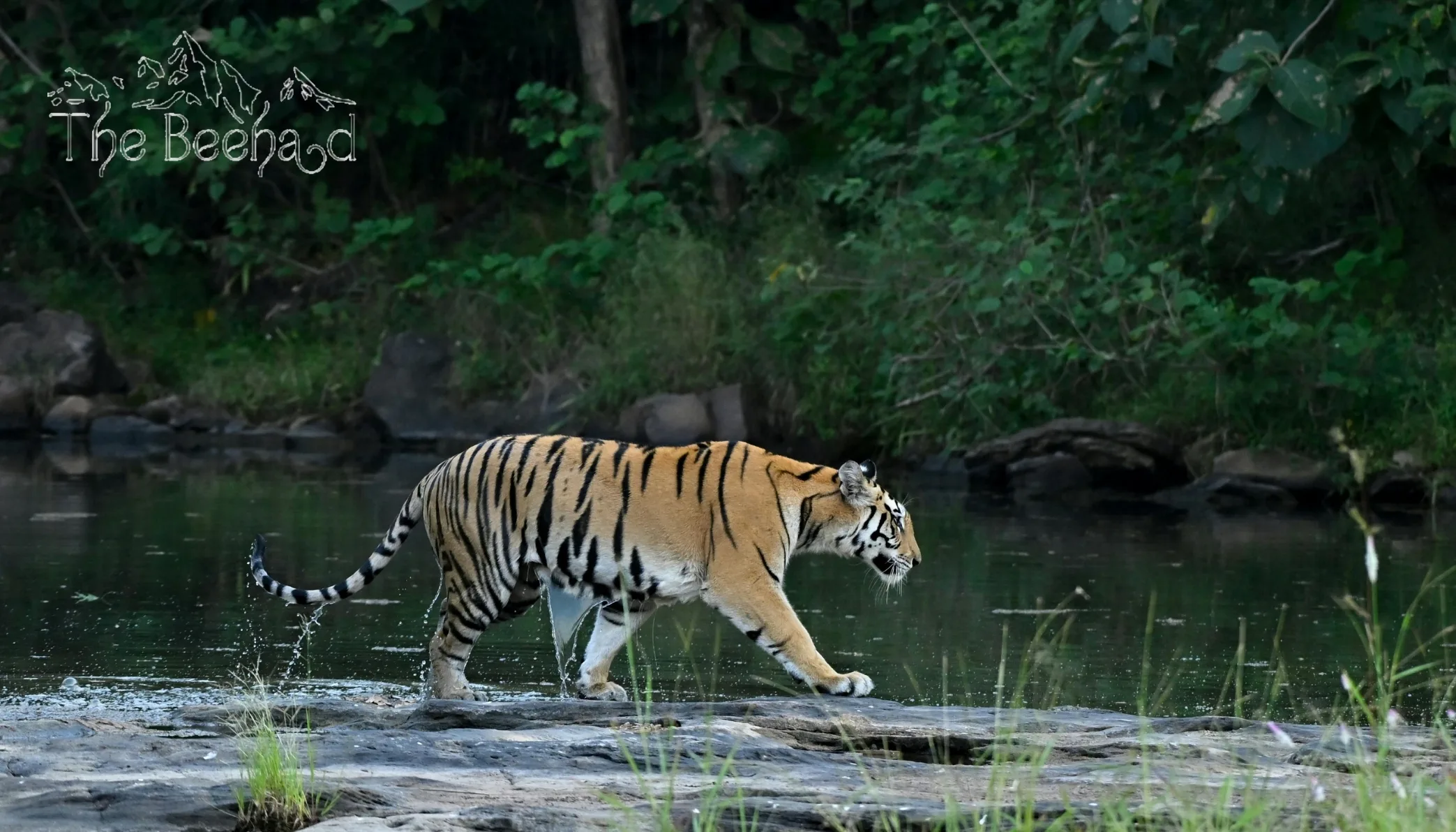
No reserve anywhere in the world had done this successfully before. Today, Sariska has over 30 tigers and counting. When you spot a tiger on a wildlife safari at Sariska National Park, you are watching the direct result of one of conservation's most remarkable recoveries. That context gives every sighting a weight you simply don't feel elsewhere.
ST-7, known locally as "Pony Tail" for her distinctive tail markings, is the most photographed tiger in Sariska. She has been documented repeatedly in and around the core safari zones and has become something of a benchmark sighting for wildlife photographers visiting the reserve.
Knowing individual tigers by name and territory is part of what makes repeat safaris here so compelling. Naturalists who know the forest track movement patterns, territory shifts, and cub cycles — information that transforms a safari from passive sightseeing into active wildlife tracking.
Sariska spans 866 square kilometres of the Aravalli Hills, and the forest supports far more than tigers. Here is what has been documented:
The forest type — dominated by Anogeissus pendula (dhok trees), a characteristic dry deciduous species — creates open visibility that makes wildlife spotting easier than in denser reserves. You can often see further into the forest here than in Ranthambore or Corbett.
Most visitors make a direct comparison. Here is the honest difference: Ranthambore is more famous, more crowded, and significantly more competitive for safari permits in peak season. Sariska, despite holding a comparable tiger population in a smaller core area, sees far fewer tourist vehicles inside the forest on any given day.
What that means in practice: quieter drives, less vehicle competition at sighting spots, and a more genuine immersion in the environment. If a tiger appears, you are less likely to be surrounded by 15 other jeeps. The wildlife safari at Sariska National Park still delivers — with fewer people in the way.
The Neelkanth temple complex sits inside the forest and dates from the 6th to 9th centuries. It is not a single temple — it is a scattered collection of more than 300 ancient Shiva shrines, mostly in varying states of ruin, spread across a hillside deep in the reserve.
Getting there requires a drive through active wildlife territory, and sightings of langurs, deer, and occasionally leopards are common on this route. The site is almost always quiet — few tourists make the effort — and the combination of ancient carved stone, forest canopy, and the sound of birds overhead gives it an atmosphere unlike any managed heritage site in Rajasthan. This is one of the most genuinely underrated experiences in the region.
Most hill forts in Rajasthan are surrounded by towns and tourists. Kankwari Fort is surrounded by jungle. Located deep inside Sariska's core zone, this 17th-century structure was built by the Alwar king Jai Singh II and later used by Mughal Emperor Aurangzeb, who imprisoned his own brother Dara Shikoh here in 1658
It is only accessible by jeep safari — the same vehicle that takes you through wildlife territory. On the same drive, you might see a hyena on the road and then park at the base of a centuries-old fort. The juxtaposition is unusual enough to be genuinely memorable.
With over 220 documented bird species, Sariska is not just a big cat reserve — it is one of the more varied birdwatching destinations in North India. The white-rumped vulture, a critically endangered species, has been recorded here. The crested serpent eagle, grey francolin, and Indian peafowl are regular sightings on most safaris. During winter months, the grassland edges and Siliserh Lake attract migratory species.
Bird photographers specifically target the early morning hours in October through February, when the light is clean and activity is highest. If birds are your primary interest, you can structure your safari around birdwatching routes rather than tiger sighting zones.
Every major tiger reserve closes its core zones during the monsoon (July to September). Sariska does something different. The reserve has formalised a Monsoon Safari in its buffer zones — covering Siliserh, Bala Quila, and the Dadikar forest area.
These buffer zone drives focus on the natural richness of the forest during and after the rains — when the vegetation is at its fullest, waterfalls are active near Pandupol, and the Aravalli landscape turns an extraordinary shade of green. Wildlife that tends to disperse during the monsoon concentrates near buffer water sources. It is a quieter, less competitive experience — and a reason to visit Sariska even in the months when most parks are completely off-limits.
Inside the reserve, close to Pandupol, sits a temple dedicated to Lord Hanuman with a direct mythological link to the Mahabharata. It is one of the most visited pilgrimage sites in the Alwar region, drawing local devotees alongside wildlife tourists. A seasonal waterfall runs close to the temple during and just after the monsoon season, making the setting particularly atmospheric in September and October.
The route to Pandupol passes through a forest that is often productive for bird sightings, and the combination of pilgrimage, waterfall, and jungle in a single outing is something that most Sariska visitors don't know to plan for.
Sariska is 200 kilometres from Delhi and 110 kilometres from Jaipur. The drive is well-managed on NH 48 and NH 248A. That makes it one of the most accessible tiger reserves in India for weekend visitors — but the more important point is what that accessibility allows.
You can reach Sariska in time for an evening safari on a Friday, do a full morning drive on Saturday, explore Kankwari Fort and Neelkanth in the afternoon, and return to Delhi or Jaipur on Sunday with two to three safari drives completed. No flights, no overnight trains, no complex logistics. For repeat visitors who want to learn the reserve over multiple seasons — watching the same tigers, tracking territory changes, returning to the temples at different times of year — this proximity makes that depth of engagement possible in a way that Corbett or Bandhavgarh simply cannot.
Where you base yourself in Sariska matters — for comfort, proximity to the forest, and the quality of guidance around each drive. The Beehad is a nature retreat in the Aravalli landscape near Sariska, built around genuine immersion rather than resort luxury. Among resorts near Sariska, the property shares the reserve's rocky Aravalli terrain, dry deciduous forest light, and early morning silence. Experienced naturalists brief guests before every safari and help interpret each drive afterwards, drawing on local knowledge of tiger territories, bird routes, and seasonal behaviour that shapes what you notice in the forest. The Beehad suits travellers who come for tigers and leave understanding the park differently.
Ans. Sariska is the quieter cousin. Ranthambore gets crowded and competitive, with jeeps jostling for the same sighting spot — Sariska doesn't have that problem. Fewer vehicles mean calmer drives and more space actually to watch, and with over 30 tigers in the reserve, you're not sacrificing wildlife for peace.
Ans. You can visit it, actually. Most tiger reserves in India close down for the monsoon, but Sariska keeps going with a proper Monsoon Safari through its buffer zones from July to September. It's a completely different Aravalli — everything's green, the waterfalls near Pandupol are running, and animals gather around the buffer's seasonal water sources.
Ans. More than you'd expect from a tiger reserve. Deep inside, there's the Neelkanth temple complex — over 300 Shiva shrines dating back to the 6th–9th centuries. And safaris take you right up to Kankwari Fort, a 17th-century Mughal jail where Aurangzeb once locked away his own brother, Dara Shikoh.