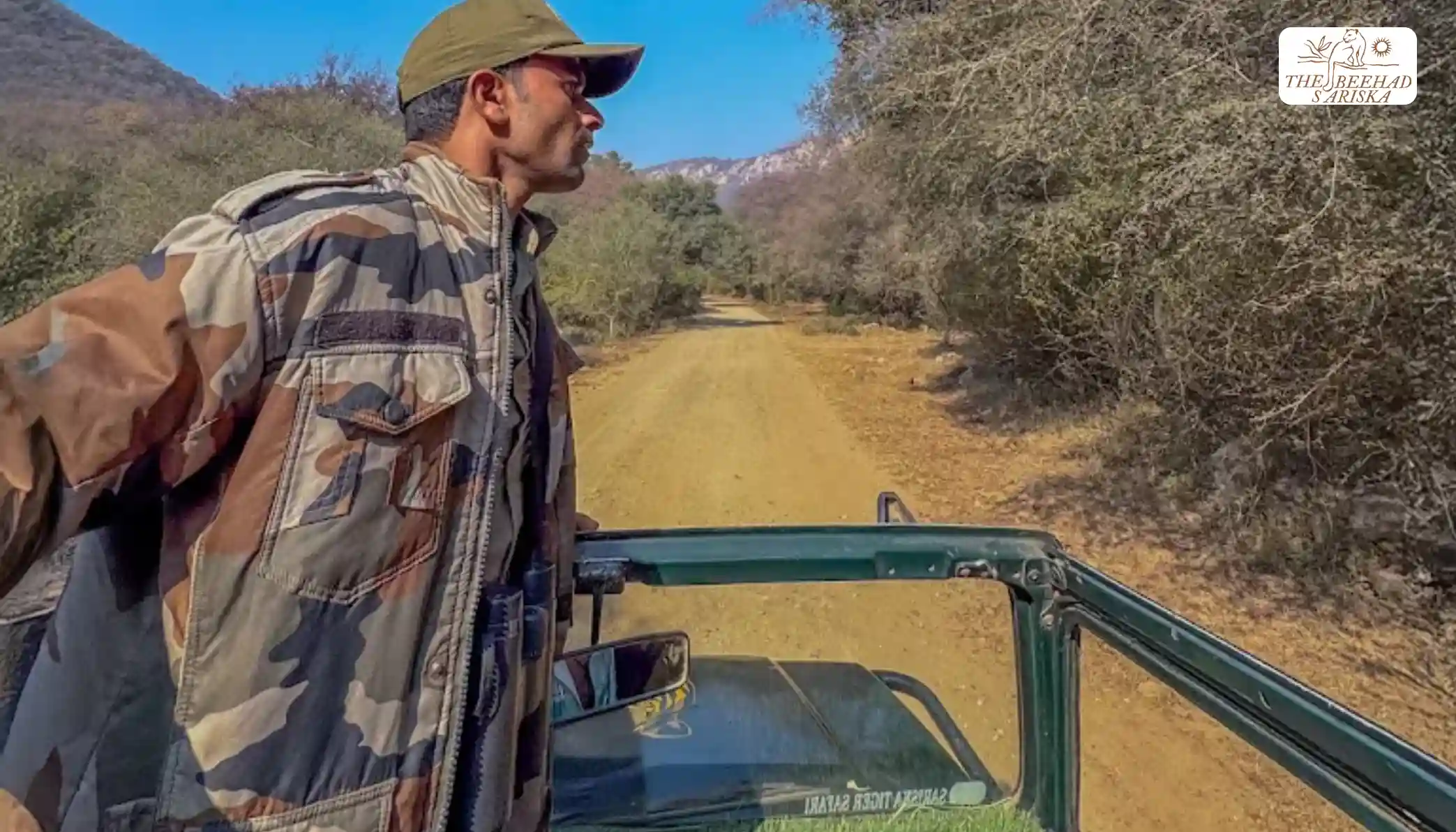
Packing for a Sariska safari means accounting for three variables: the season you are visiting in, whether your safari slot is at dawn or late afternoon, and the specific terrain of the Aravalli hills, which behaves differently from the open grasslands of Central India or the lake-flanked corridors of Ranthambore. Get these three variables right, and your kit almost writes itself. Get them wrong, and you spend the first morning of your safari either freezing in an open jeep or excavating dust from your camera lens.
Sariska is not a grassland park. The Aravalli range gives it a different character — rocky ridgelines, dense dhok forest, narrow ravines, dry riverbeds. Each creates specific packing demands.
Dry-season dust between October and June is significant. Dry safari tracks can become dusty during the hotter months, and fine dust can settle on clothing, skin, and camera equipment. A scarf or buff is not optional comfort; it is the difference between enjoying the drive and spending it coughing.
Winter mornings from November through February can be distinctly cold before sunrise, particularly in an open safari vehicle. By April and May, daytime temperatures can become extremely hot. October and March are transitional months, so layering and checking the forecast before departure are sensible.
Insect exposure can increase during warmer and wetter periods. If you are particularly sensitive to insect bites, carry a suitable repellent and consider lightweight, full-sleeve clothing.
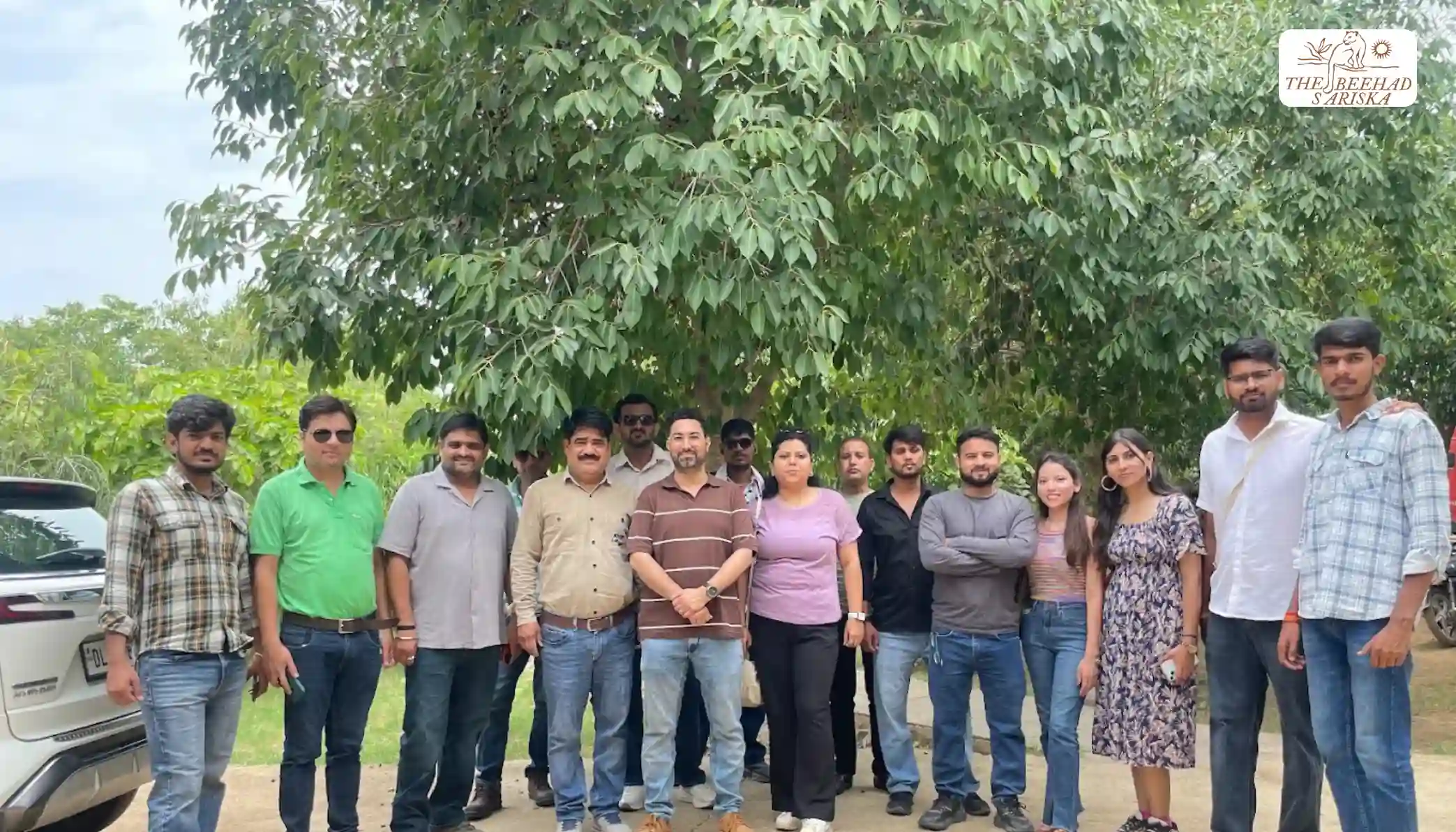
Start with colour:Muted, natural colours are commonly recommended because they are less visually conspicuous against the surrounding landscape. The advice is primarily about reducing visual distraction and making you less visually prominent, rather than guaranteeing that wildlife will not notice you.
Bright colours,white especially, can create greater visual contrast against vegetation and may also reflect more light. The practical aim is to avoid appearing unnecessarily conspicuous in the landscape. Olive, khaki, beige, dark green and stone grey are therefore practical choices for a safari.
Avoid fabrics or outer layers: These make noticeable rustling sounds when you move. A noisy jacket or outer layer can be distracting in the quiet of a safari vehicle, so choose clothing that remains relatively quiet when you move. Soft cotton, wool, and low-noise technical fabrics can all work well, provided they do not rustle noticeably during movement.
Strong fragrances:Avoid them because unnecessary scents can be intrusive in a close wildlife-watching environment.
Fabric by season:October to March — layered cotton and wool, synthetics only as a wind-resistant outer shell. April to June — lightweight full-sleeve cotton. Full sleeves, not short. They protect from sun and insects across a two-to-three-hour drive.
A November or December morning in the Aravalli region feels manageable at 6 AM. As the open vehicle moves, airflow can make cold mornings feel considerably colder than the ambient temperature alone suggests. This is easy to underestimate when packing for a dawn safari.
The three-layer system that works:
Layer 1 — Thermal base: A thermal vest or full-sleeve top against the skin. The most important layer and the one most visitors omit.
Layer 2 — Fleece or warm mid-layer: Your primary insulation. A fleece jacket or thick woollen jumper.
Layer 3 — Wind-resistant outer: A lightweight jacket that cuts moving air without bulk. It does not need padding; its job is to stop wind stripping warmth from the fleece beneath.
Beyond layers: a woollen scarf large enough to cover your face and neck (functional, not decorative), a warm hat covering your ears, gloves, and closed shoes with warm socks. As the morning warms, you may want to remove one or more layers. Pack layers that come off quietly, stowed in a soft bag without rustling.
The hotter months can improve the chances of seeing wildlife near remaining water sources, although tiger sightings are never guaranteed. Early-morning safaris also avoid the worst of the daytime heat. As water sources diminish, wildlife concentrates around remaining pools.
Dawn safaris, when temperatures are still manageable, are when this concentration is most visible. Summer requires adjustment, not avoidance.
What works:
Morning safaris in summer start early. The cooler early hours can offer favourable conditions for wildlife activity and photography. Be ready at the property's departure time.
Sariska Tiger Reserve typically suspends regular safari operations during the monsoon season. Exact dates vary annually and are confirmed by the Rajasthan Forest Department; check current status before finalizing your Sariska safari booking for July through September.
The wider Alwar region. Bhangarh Fort , one of the most atmospheric heritage sites in Rajasthan, is approximately an hour from the reserve and is accessible year-round. Neelkanth Temple , an important historic temple complex in the Sariska landscape, can still be visited. Alwar city heritage sites and the Siliserh Lake area remain open.
A lightweight rain jacket (packable, not bulky), waterproof footwear or sandals with grip on wet stone surfaces, quick-dry clothing, and insect repellent. Mosquito and insect activity peaks during and immediately after the rains.
8×42 is better than 10× for Sariska. Higher magnification sounds appealing until you are tracking a leopard through the Dhok forest; the narrower field of view makes it significantly harder to find and follow a moving subject. 8×42 gives a wider field and brighter image in low morning light.
Keep spare batteries in an inner pocket or other relatively warm, dry place during cold-weather safaris. Carry at least one spare memory card, with additional capacity based on your camera settings and expected shooting volume. A lens cloth for dust is essential from October through June.
It is what separates experienced safari visitors from first-timers. Rustling plastic bags, loose coins, a metal bottle rolling on the jeep frame, phone notifications mid-drive — all announce your presence. Pack small items in soft zip pouches. Phone on silent from departure, not from the gate.
If you take regular medication, carry your full supply because access to medical services may be less convenient during a safari day.
A packing list that only covers what to bring is half a list.
| Category | Winter (Nov–Feb) | Summer (Mar–Jun) | Monsoon activities |
|---|---|---|---|
| Clothing | Thermal + fleece + wind layer | Full-sleeve cotton | Light layers, rain jacket |
| Head/face | Warm hat, scarf (full-face coverage) | Brimmed hat, cotton buff | Hood or packable cap |
| Footwear | Closed, warm, waterproof | Closed, breathable | Waterproof with grip |
| Eyes/sun | Sunglasses | Sunglasses + eye drops + SPF50 | — |
| Optics | 8×42 binoculars, spare batteries (inner pocket), lens cloth | Same | — |
| Health | Antihistamine, personal meds, first aid | Add ORS, lip balm | Insect repellent |
| Do not bring | Noisy synthetics, bright colours | Strong perfume, open food | Drone without authorisation |
The morning described in this guide — pre-dawn departure, cold air over Aravalli terrain, dust-track safari in earth-tone layers, binoculars focused on a dhok forest alarm call- begins the night before. It begins with where you stay.
The Beehad Luxury Resort in Sariska sits near Tehla in Rajgarh, Alwar district, close to the Sariska Tiger Reserve. Six AC cottages and four AC luxury camps offer guests both comfort and access — a combination that positions The Beehad as one of the natural starting points for a Sariska safari stay. The property has a multi-cuisine restaurant, a swimming pool, and arranges jeep and canter safari bookings for guests.
Ans. Three layers: a thermal base, a fleece or warm jumper, and a wind-resistant outer jacket. Add a woollen scarf large enough to cover your face and neck, a warm hat that covers your ears, gloves, and closed shoes with thick socks. The temperature in a stationary position and the temperature in a moving open jeep at dawn are very different experiences. Most people who visit in December or January wish they had brought one more warm layer than they planned.
Ans. Regular tiger safari operations at Sariska Tiger Reserve are typically suspended during the monsoon months. Exact closure dates vary annually — confirm current status with the Rajasthan Forest Department or directly with The Beehad before travel. The wider Alwar region remains accessible: Bhangarh Fort, Neelkanth Temple, Alwar city heritage sites, and Siliserh Lake are all worth visiting regardless of safari availability.
Ans. Muted, natural colours such as olive, khaki, beige and stone grey are practical choices because they are less visually conspicuous against the landscape. Bright or highly contrasting colours, including white, are generally best avoided. The aim is to minimise visual distraction rather than assume that a particular colour makes you invisible to wildlife.
Ans. The Beehad arranges jeep and canter safaris and has a full restaurant and amenities on site. For specific safari provisions — whether chai, warm blankets, or packed water — all are included with your safari booking; confirm directly with the property at the time of booking. This avoids both over-packing what the resort covers and under-packing what you genuinely need to bring yourself.